
Reawakening the hope within: Ayoom’s story and the challenges of Kakuma Refugee Camp
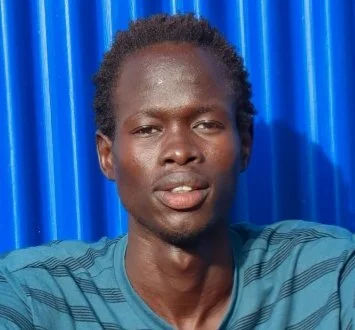
Written by Luka Gatwech
Educator at JRS/Kakuma Refugee Secondary School, Amala partner organisation
As more crises flood our world, there is only one thing that can engender hope in us as young people and that is education. We need education like that of Amala, which not only aims to change society but also to create a world where inclusion and diversity of refugees, migrants, internally displaced people, asylum seekers and host country learners brings global transformation.
We need educators and visionary partners to expand our workforce to reach young people. We need quality and effective education in our homes, families, in entrepreneurship sectors, in our private institutions and in our government systems. We need education more than ever before. And most especially, we need education to drive us into the future, in this fast changing world we live in.
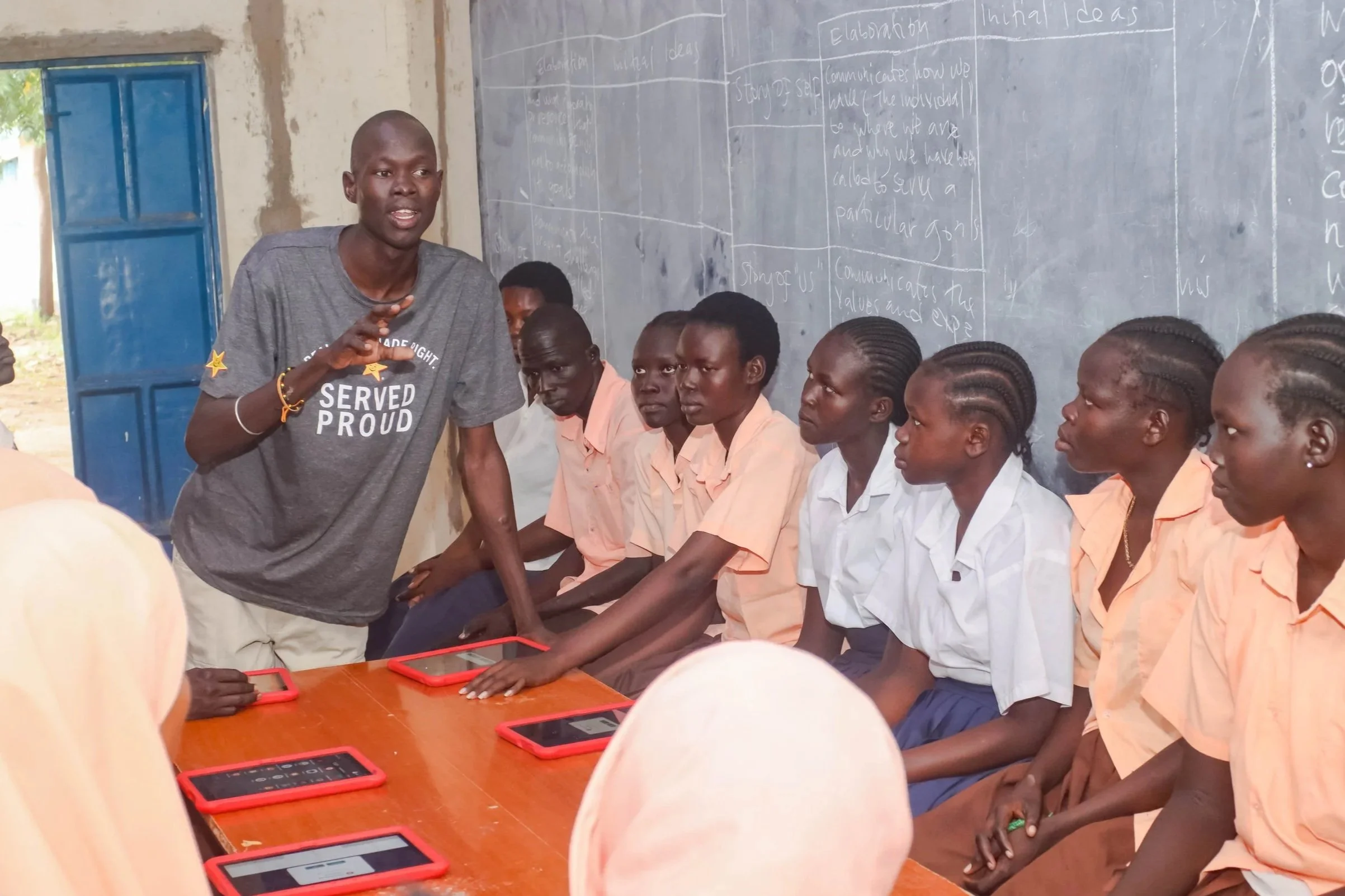
My experience with Amala is as an educator. I learned a lot about how to teach and bring change out of the students. And we can see that through the journey of Ayoom Amala has taught her who she is. The time is now for people who have talent, vision and courage to find education.
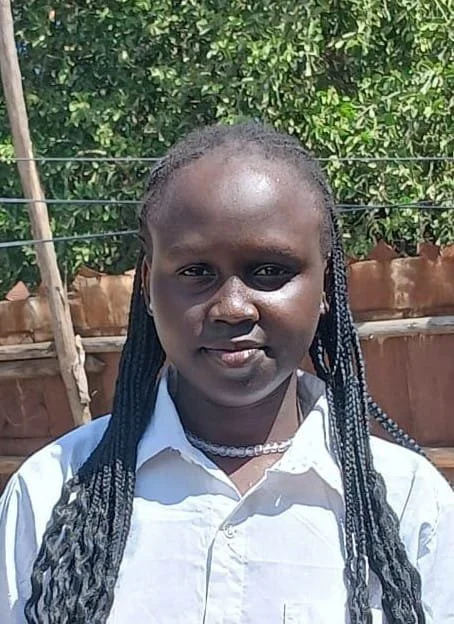
Ayoom’s story
Ayoom is a 19-year-old South Sudanese artist who took the Art and Cultural Expression course in 2025. During her education back home, she never dreamed of an opportunity like Amala which provides education which will lead her one day to her desired destination, and be a blessing to the community where she came from.
To Ayoom, her experiences with Amala continue to build resilience, confidence and passion for education. In Kakuma Refugee Camp where Ayoom takes refuge, girls like her are disconnected from proper education systems that connect with proper healthcare and wellbeing. Kakuma is a barren land with scorching sun and deadly scorpions, where outbreaks of maladies can hit anytime. Despite the hardships and difficulties that Ayoom went through, her dream of learning is still alive.
“Education is a branch of a tree that offers hope and power, even if life seems like it’s crumbling.”
Ayoom was raised and brought up by a single mother, and she was the one who did all the chores at home. Keeping up with studies was so hard sometimes she barely came to school. She has been struggling to balance home life with her studies. “ I realised that there is a lot to learn in the courses which I enrolled myself in. I came to love school through my facilitators and the way the curriculum was designed. It was not only to educate me on the cultural and arts perspectives but about life and how to use the skills that I received,” said Ayoom.
Imagine sitting in a classroom thinking about domestic chores: the situation makes it hard for Ayoom to sit in class and focus on her studies. With the aid from the World Food Programme (WFP) and UNHCR's “Bamba Chakula” [food assistance scheme], families were able to afford the cost of living and students still had the energy to go to school. But after the introduction of Differentiated Assistance, youths and elders alike got scared by the tension.
This led to huge numbers of the refugee community going by foot back to their home countries with burdens, trauma and scars on their hearts. When Ayoom was in her country, she used to make beautiful artworks of South Sudan landscapes and loved to show the rich nature of her community. Through Amala’s Art and Cultural Expression course, Ayoom has reconnected with self-expression through creativity.
“I used to dream high like any other child in the world but circumstances limited my focus and ability. Today my heart leaps and bounds back from childhood trauma. Through Amala I have reconciled with peace, love and unity.”
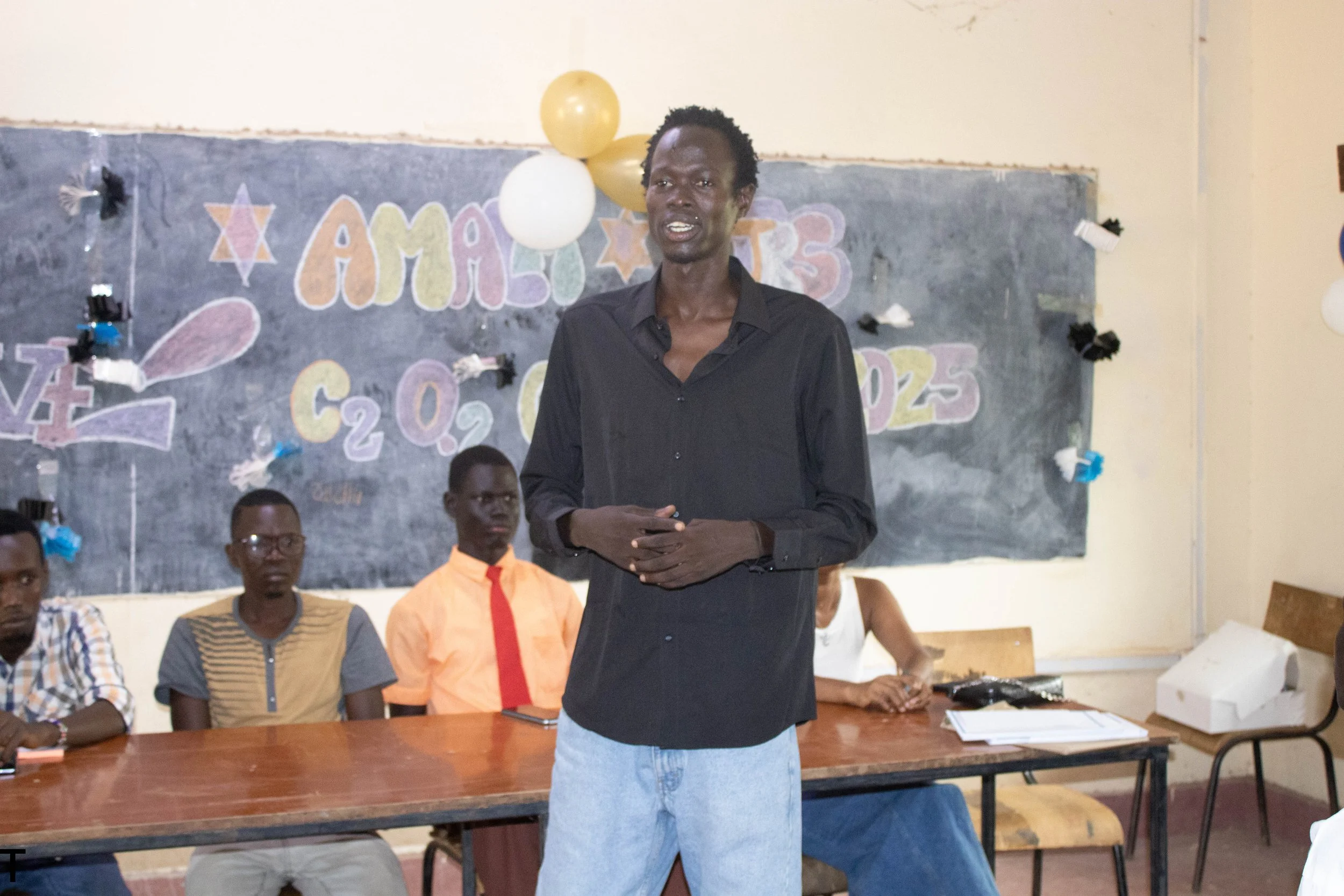
Luka at Ayoom’s graduation day
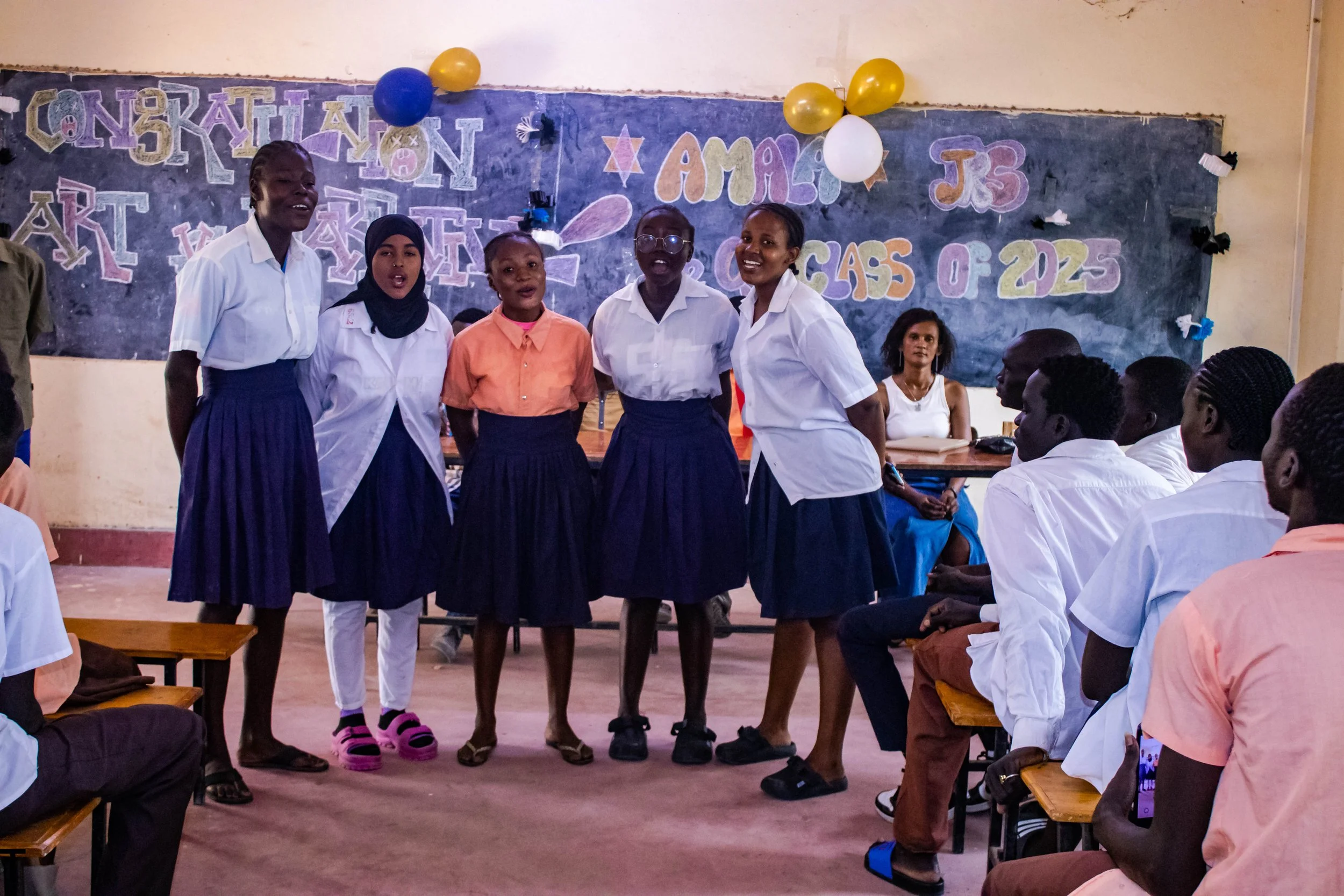
Graduation at Kakuma Refugee Secondary School